




When Structures Give Way to Sky

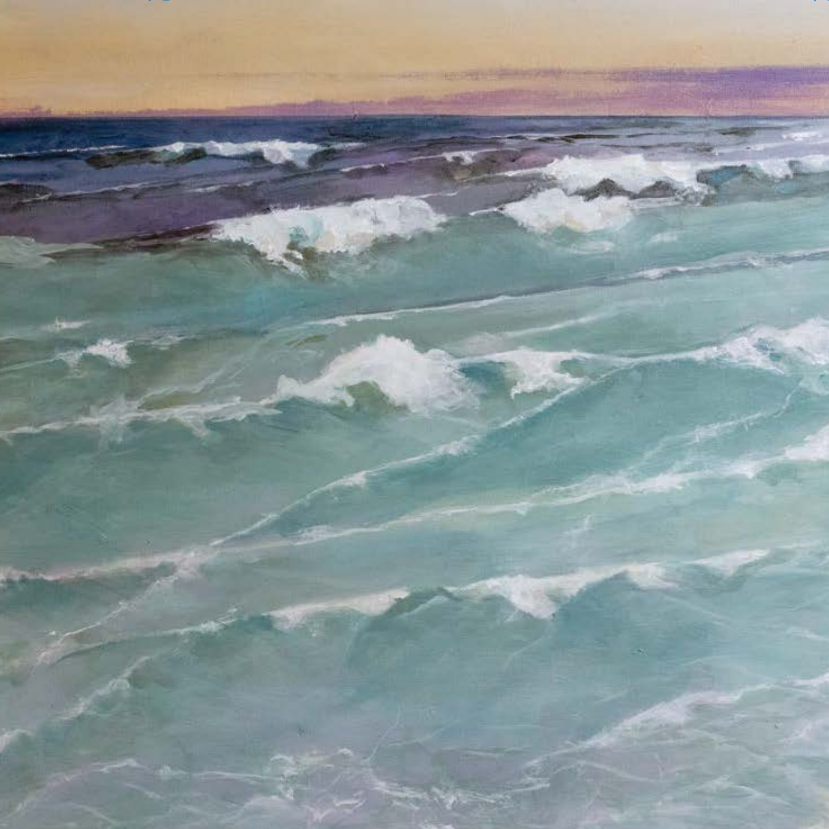

Long before Dodie Smith ever drew a blueprint, she was staring out airplane windows.
As a child, flying to a small barrier island off the coast of Carrabelle, Florida, she became mesmerized by the clouds drifting beneath and around her. While other passengers saw weather, she saw wonder. The clouds shifted shape, caught light, disappeared, and returned—never quite the same twice.
For most of her professional life, Dodie viewed the world through the disciplined lens of an Architect, designing spaces that balanced beauty, function, proportion, and purpose. Yet beneath that accomplished career flowed another creative current, one quieter, less structured, but no less powerful.
“Art has always been an underlying force in my life,” Dodie explains. Like a stream running beneath a valley, creativity never disappeared; it simply traveled alongside her architectural practice for decades. As she began gradually stepping away from architecture and toward retirement, that current rose to the surface in the form of paint, canvas, texture, and color.
What emerged was not a reinvention but a homecoming to the little girl in the clouds.
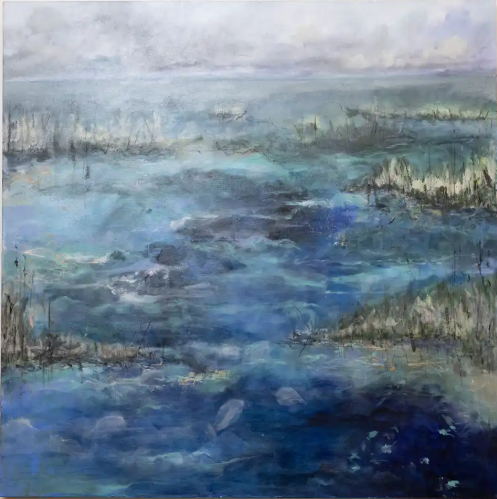
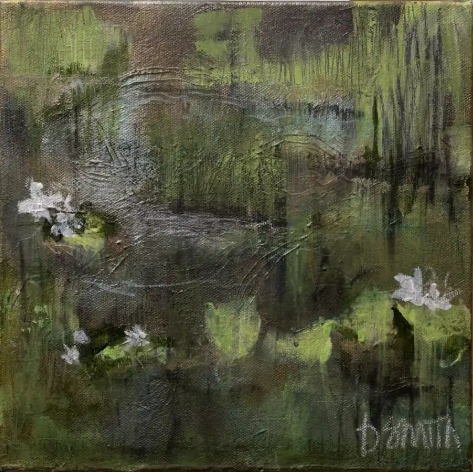
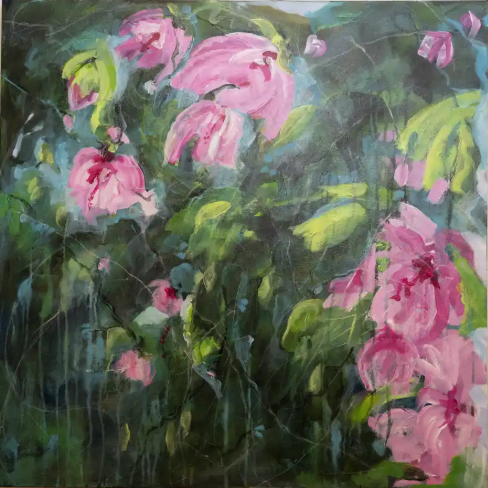
Today, Smith’s paintings are filled with marshes, beaches, florals, abstractions, landscapes, and yes still clouds that seem suspended somewhere between memory and imagination. They are works that invite viewers to pause, breathe, and wander into their own recollections.
The cover painting featured in this issue springs directly from those early years spent vacationing on the Florida barrier island she loved as a child. The shoreline, the white cap waves begging to be touched, the ever-changing skies, and the rhythm of coastal life remain woven into her artistic vocabulary. Not because she intends to paint nostalgia, but because those places never really left her.
“Artistic inspiration is everywhere,” she says, and, for her, it has become a way of responding to the world rather than documenting it as she had in her architectural career, mending art to fit measurements and codes. Art gives her the ability to shed the restrictions and focus on what could be instead of what must be.
“A marsh is not simply a marsh. A cloud is not simply a cloud. They are catalysts for emotion, memory, and interpretation.”
That freedom stands in striking contrast to the profession she spent decades mastering. It is perhaps the most liberating aspect of her artistic life. Architecture demanded precision. Every line carried consequences. Every measurement mattered. Buildings had to stand, function, and endure.
Painting asks something entirely different. It asks her to trust intuition.
Interestingly, Dodie’s transition from architect to artist did not mean abandoning her architectural training. Instead, it enhanced it. As an architect, she spent years learning how to translate two-dimensional drawings into three-dimensional spaces. “That is the craft of the architect,” she explains. Painting reverses the equation. “In art, you have to focus on the three-dimensional and learn how to express it two-dimensionally. It’s a reverse flow of intuition.”
That challenge fascinates her.
There is a playfulness in switching directions, in moving from technical certainty toward creative discovery. It allows her to engage parts of her imagination that architecture often kept politely waiting its turn.
Yet architecture still informs her work. Scale, balance, beauty, and proportion remain essential components of every canvas as it was in every design project . People often tell architects they want symmetrical homes, believing symmetry creates harmony. Dodie knows differently. Art has taught her that balance does not require perfect mirroring. Asymmetry can feel just as complete, just as satisfying, and often far more interesting.
The lesson extends beyond design. It is a philosophy of seeing. Like the beaches and marshes she paints, life rarely arranges itself in perfect alignment. Beauty often emerges from irregularity, surprise, and imperfection. That willingness to embrace unpredictability defines Dodie’s creative process.
“I paint with chaos,” she says. And she means it.
Her studio is a playground of experimentation. Acrylics mingle with oils. Cold wax shares space with graphite, oil sticks, spray paint, and whatever else might leave an interesting mark. Sometimes she sprays water onto a surface. Sometimes alcohol. Sometimes coffee. “Graphite sprayed with coffee is a gorgeous effect,” she says. Cold wax often over acrylic allows her to create rich layers of texture. Using tools collected from around her home, she scratches, carves, and marks the surface, creating intricate details that reveal themselves slowly.


The process feels part excavation, part invention. Each layer conceals and reveals simultaneously. Each mark tells a story. Dodie explains that her “works are related by differing levels of organic interpretation of marshes, beaches, florals, not with intention but as a response to things that are impactful to me. I haven’t limited my art in the development of a style, and my lack of direction is something I am embracing.”
That combination of discipline and spontaneity gives her work its distinctive character. The landscapes she paints often feel dreamlike—not because they are imaginary, but because they capture something deeper than geography. They capture atmosphere.
Marshes are among her favorite subjects. Their colors shift with the seasons. Their contours change with light and weather. The marshes surrounding the Florida coast of her childhood remain vivid sources of inspiration, as do the spectacular wetlands she encounters traveling between New Orleans and Fairhope.
The same is true of beaches and clouds. Especially clouds. Perhaps because they represent what Dodie values most as an artist: movement, possibility, and transformation. They refuse to stay fixed. They invite interpretation. They remind us that beauty is often fleeting.
When viewers encounter her paintings, Dodie hopes they feel something familiar like a distant memory, a peaceful moment, a place they once loved, or perhaps simply a feeling they cannot quite name. And even more, she hopes they take that piece home with them to feel it in the space they inhabit every day. “I think a house is not a home without art,” she says, and it is a belief she carries deeply. Art, in her view, should not feel intimidating or precious. It should live alongside us. It should spark conversation, evoke emotion, and quietly enrich everyday moments.
You can find Dodie’s paintings on display at The McCall Gallery on Julia Street—join her there for White Linen Night! She is also grateful for the beautiful displays of her work at The Hillyer House in Ocean Springs, Mississippi, and Atchison Home in Mobile and Fairhope, Alabama. Fairhope and New Orleans are also home bases for her art studios, where she stores finished pieces for pop-up markets like Whimsies in City Park.
Whether hanging in a beach house, a family room, or even outdoors beside a swimming pool, Dodie wants her paintings to be enjoyed rather than preserved behind glass and ceremony. Perhaps that is what makes her journey so compelling. After spending a lifetime creating structures for others, Dodie Smith now creates spaces of a different kind; places built from color, memory, texture, and imagination.
The architect still exists, of course. She always will. But these days, when structures give way to sky, it is the artist who leads the way.